Hero
Education

Online Freedom or Classroom Structure: Which Works Better? Ft. Martin Mirakyan

About our Featured Expert

person
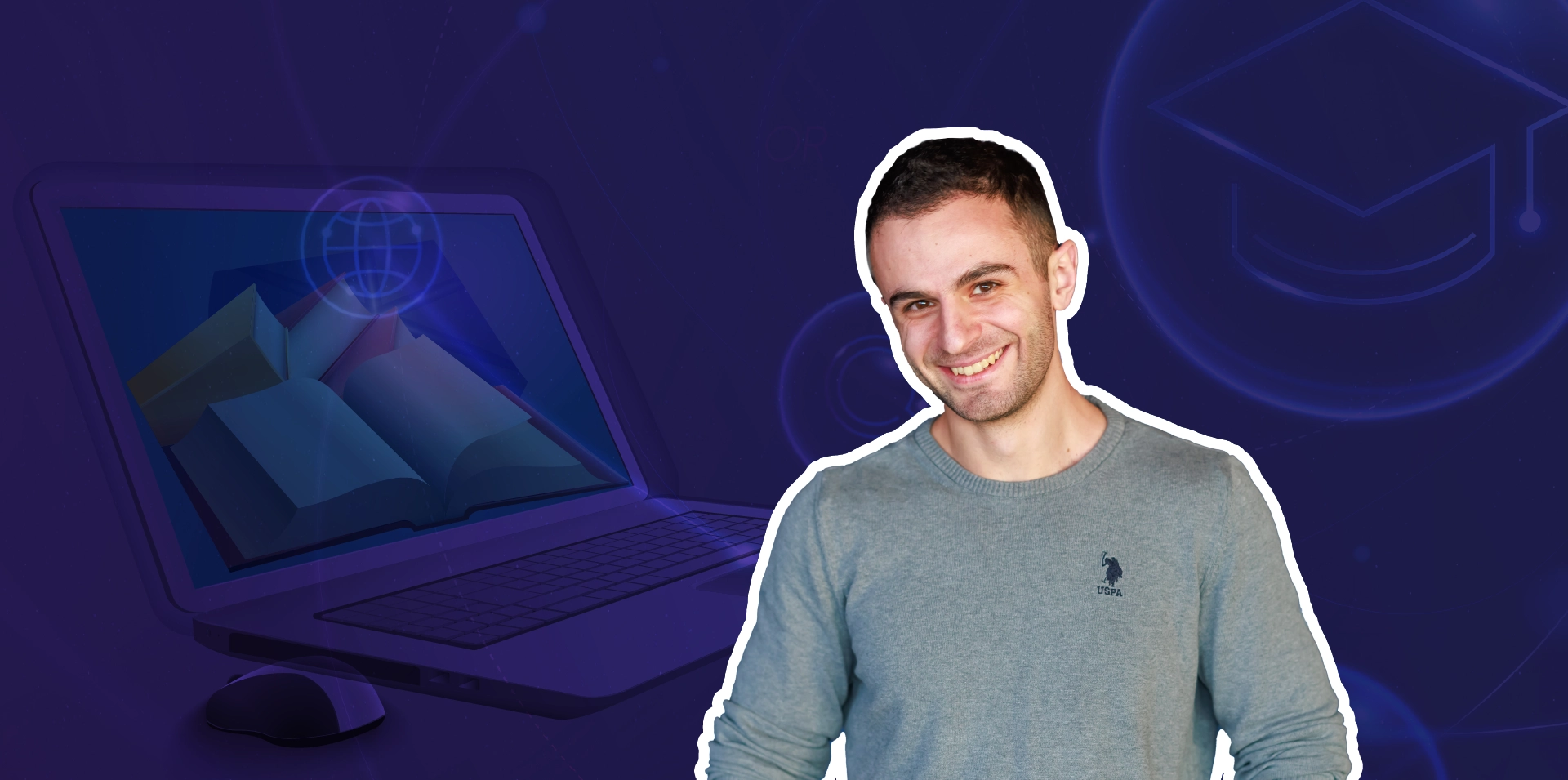
Martin Mirakyan
Founder and CEO of Profound Academy — an online platform used within the Generation AI High School Project to teach Python and core coding skills to Armenian students — to discuss how technology is changing education, what it takes to keep students motivated online, and how AI-powered learning is redefining the classroom experience.

Ever since the rise of online learning attitudes toward it have remained widely polarized. 


On one hand, thinkers like Giorgio Agamben have called it a Requiem for the Students. Written at the height of the pandemic, Agamben argued for the irreplaceable role of physical presence between teacher and student, warning against a “technological barbarism” that threatens to harm the culture of discussion — the very heart of intellectual life. 


On the other hand, advocates like Sal Khan envision online education as a democratizing force — a way to personalize learning, remove barriers, and “provide a free, world-class education to anyone, anywhere.” provide a free, world-class education to anyone, anywhere.” Between these poles of critique and optimism lies the unresolved tension over the role of online education.

blog widget
Is Online Education a Short-Term Response to the COVID Crisis—or Is It Here to Stay?

Online education definitely got a major push during the COVID crisis, but that wasn’t its core catalyst. In my case, although I created Profound Academy during the COVID period, in 2021, it wasn't built as a response to the pandemic. Our first use case was with an Olympiad-level programming group we were holding at Ayb School, where I was once a student. I needed something that made hands-on learning easier and more effective.


The evolution of online and hybrid education has come in waves. COVID forced widespread adoption—it made everyone use it, and to some extent, people adapted to these changes. On the other hand, many challenges in this field remain unresolved — including low student engagement and high dropout rates. Many people begin online courses but never finish them. In contrast, traditional settings, such as schools or universities, offer more efficient mechanisms to influence students and help ensure course completion.


So, the decline in usage is understandable. Yet, no one can deny the advantages it brings. 

So, Which One Helps Us Learn Better: Online or Classroom setting?

Online education is most effective when it complements in-person instruction, not when it tries to substitute for it entirely. So yes, it is here to stay and I believe it will become a standard part of the learning process.

blog widget
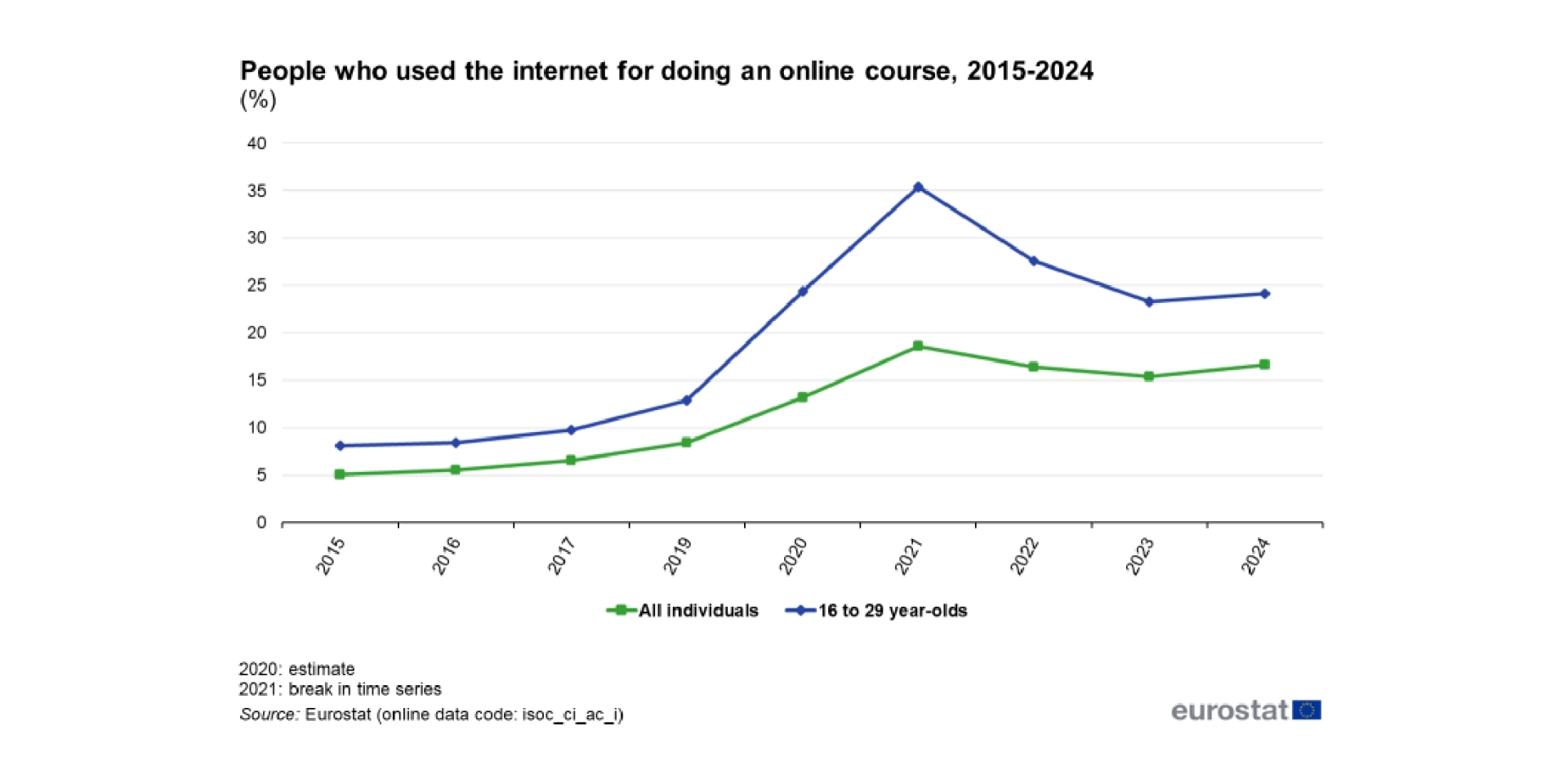
An example of wave-like development and participation in online courses, based on changing dynamics across EU countries.
What are the core strengths and challenges of online education platforms today?

CHALLENGES: 

Student engagement. When students join online classes, many don’t turn on their cameras. It’s easy to get distracted, start doing other things, and disengage. So keeping students involved is a major issue.

Cheating. It is the most recent among the challenges, especially with the emergence of  ChatGPT. It’s tempting to just switch tabs and get all the answers. This becomes a serious issue when students are learning from home, unsupervised, and there’s no accountability.

Low motivation, which intersects with the other two. Many learners don’t have the internal drive to complete an online course or stay focused for long periods on their own.

STRENGTHS:

Automation & Efficiency. When it comes to checking homework and assessments, online platforms offer major advantages. With automation—especially AI integration—teachers don’t need to spend hours grading. The system gives students instant feedback, which reinforces the learning process while their memory of the task is still fresh. This kind of rapid feedback loop can significantly accelerate student progress.

Interactivity+AI. Everything can become more dynamic with quizzes, exercises, even real-time polls. AI offers a lot of new opportunities. For instance, in our platform, students can use AI assistants not only when they face difficulties but also to explore better ways of solving problems. 

Depth & Flexibility. Students can solve more exercises across varying difficulty levels, allowing them to deeply explore concepts at their own pace without being limited by classroom time or teacher availability.

SOLUTIONS: 

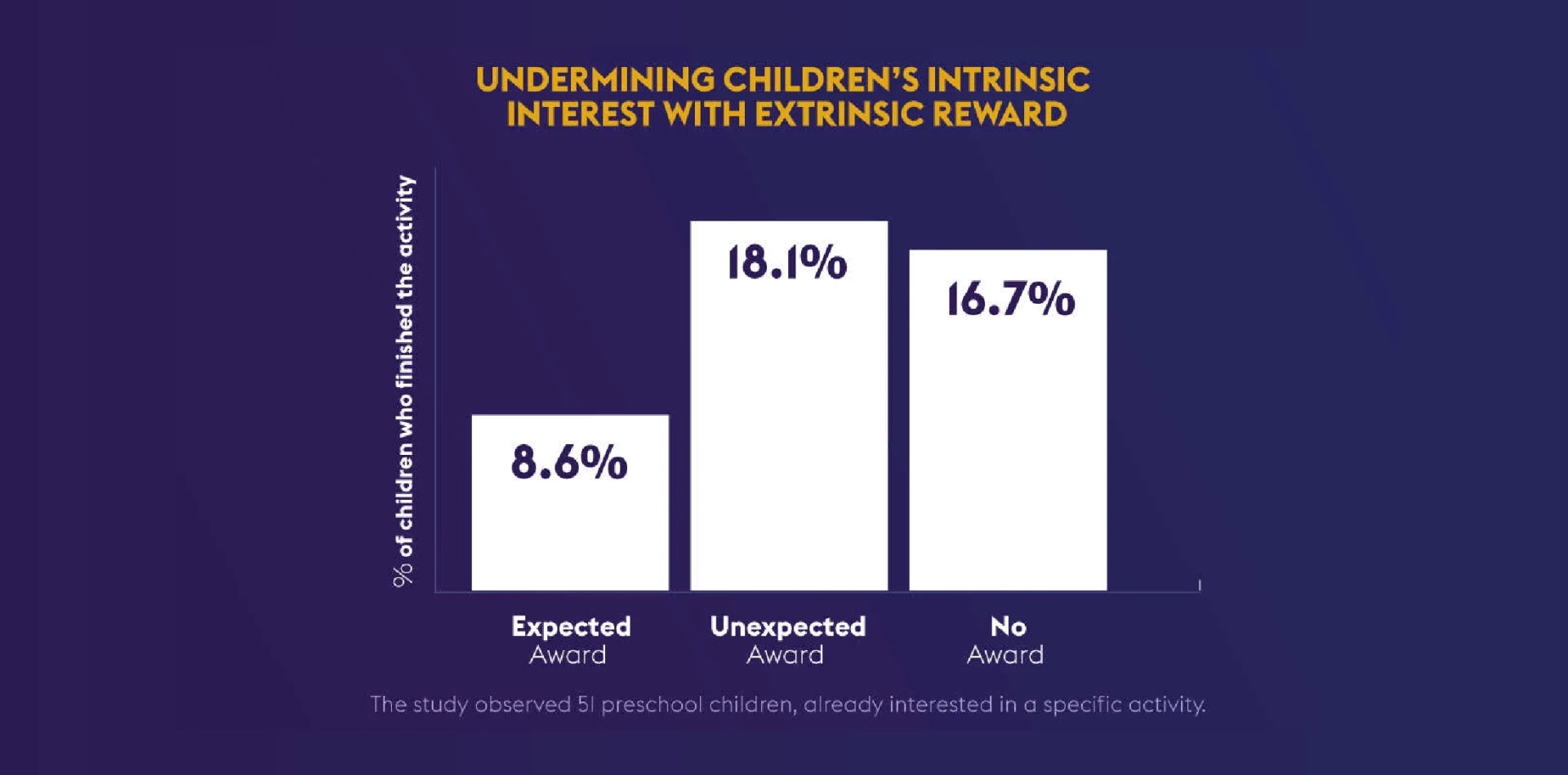
To engage students, online platforms often use gamified and competitive formats. But this has to be done carefully. Many studies show that if learning is done only for the sake of prizes and rewards, it doesn’t build intrinsic motivation—which, for me, is key in any personal learning journey.

Comparing Intrinsic Motivation and External Rewards in Children's Learning
blog widget

At Profound Academy, our focus is on progress-based motivation. Students can actually see how they’re improving step by step. 

There’s also a comparison feature that teachers can turn on or off. It shows students how they’re performing relative to peers—how quickly they’re solving problems, how consistently they’re working. For some, that’s a huge motivator. Others may find it stressful. That’s why we leave it to the teacher’s discretion.

Motivation improves when students feel part of a peer community. If a few motivated learners start working together, they inspire each other. I’ve seen this firsthand. Back in school, when I was training for computer science Olympiads, the group dynamic kept me going. If I hadn’t had motivated peers around me, I wouldn’t have pushed as hard.

Should Education Adapt to Technology, or Should Technology Adapt to Education?

I think technological advancement is the stronger force. It’s unrealistic to expect that it will adapt to the needs of a single classroom, university, or institution. Take ChatGPT—it’s already out there, and a lot of students are using it. So education must adapt to this new reality.

That means making what students learn applicable and relevant. If we can use technology to make learning more effective, that’s a huge win. But education systems are often slow to adapt. Bureaucracy and slow decision-making are major barriers.

In that sense, I think the Generation AI team has been doing a great job—moving fast to reshape and re-equip schools. But for many universities and schools that haven’t changed in decades, it’s still a major challenge to develop that kind of reactivity and proactivity.

Looking Ahead, How Will Online Learning Evolve?

I think the biggest shift will be toward personalization. More content, more exercises, more learning styles tailored to specific students. People will increasingly learn in the way that fits them best.

Think about YouTube. At first glance, we’re just watching a single video—but behind that is personalized content. Different people are offered different videos, explained in different ways, tailored to their learning style. That’s already a basic form of personalization.  But platforms will go much deeper. Eventually, an AI could design a custom lesson on the spot, just for you, based on what you’re struggling with.

Learning will become more interactive, hands-on, and individual. You’ll learn because you need to understand something in order to create. 

How Is Profound Academy Powering Python Learning in Generation AI Public High Schools?

In the Generation AI program, our platform is used in Python classes. The course already existed and aligned quite well with the program’s goals. Though this isn’t a one-time setup—we constantly update the course: refining exercises, adding or removing topics based on student performance and where they struggle.

That’s one of the biggest advantages of online education—real-time data and flexibility. We can identify patterns. For example, last year students consistently struggled with nested loops. So this year, we added simpler practice problems, clearer breakdowns, and more mid-level tasks to strike a better balance.

In the coming months, we’re working to enable any teacher to build and modify courses on the platform based on their needs.

What Role Does AI Play in Online Learning Platforms Like Profound?

We started experimenting with AI assistants even before ChatGPT’s API became widely usable. Initially, the motivation was to help students who got stuck at certain points in exercises. Many would stop entirely. Now, we use AI in everything—from assistance to translation, content planning, and more.

Students interact with three core AI features:

1. Assistant – Helps students identify mistakes and guides them to fix their code.

2. Solution Optimizer – Once a solution is correct, this tool helps the student to find better, alternative solutions.

3. Theory Companion – It enables deeper exploration of theoretical content. Students can ask follow-up questions and dig into the topic further.

We also have a cheating and plagiarism detection system, which isn’t visible but students are aware of it. Our system flags signs like tab-switching, copy-paste patterns, and even typing consistency. If code is typed unnaturally smoothly, without the usual corrections, that’s a signal too.

We’re constantly refining AI support to make it more context sensitive. In some tasks, borrowing or referencing is fine; in others, it’s considered cheating.

Why Learn at All? What’s the Motivation Behind It?

Creating—that’s the key.

The best programmers I know didn’t wait for someone to tell them what to do. They run their hobby projects—just for fun, because they want to. Personal curiosity changes everything: your motivation, your relationship with work, and learning pace. It’s the difference between being assigned a task and taking ownership of a project.

Usually, that starts with a problem you want to solve. You notice something’s missing, and you say: “Let me try to make it.” That’s how it was for me. No one made me do Olympiad problems or code Android apps in college. I just wanted to. And I learned a lot that way.

You have to start somewhere—and that first step is always the hardest. But once you begin, momentum builds naturally.

Back when I was starting out, we didn’t have as many resources as students have today. If programs like Generation AI or these kinds of platforms had existed then, I would’ve been thrilled.

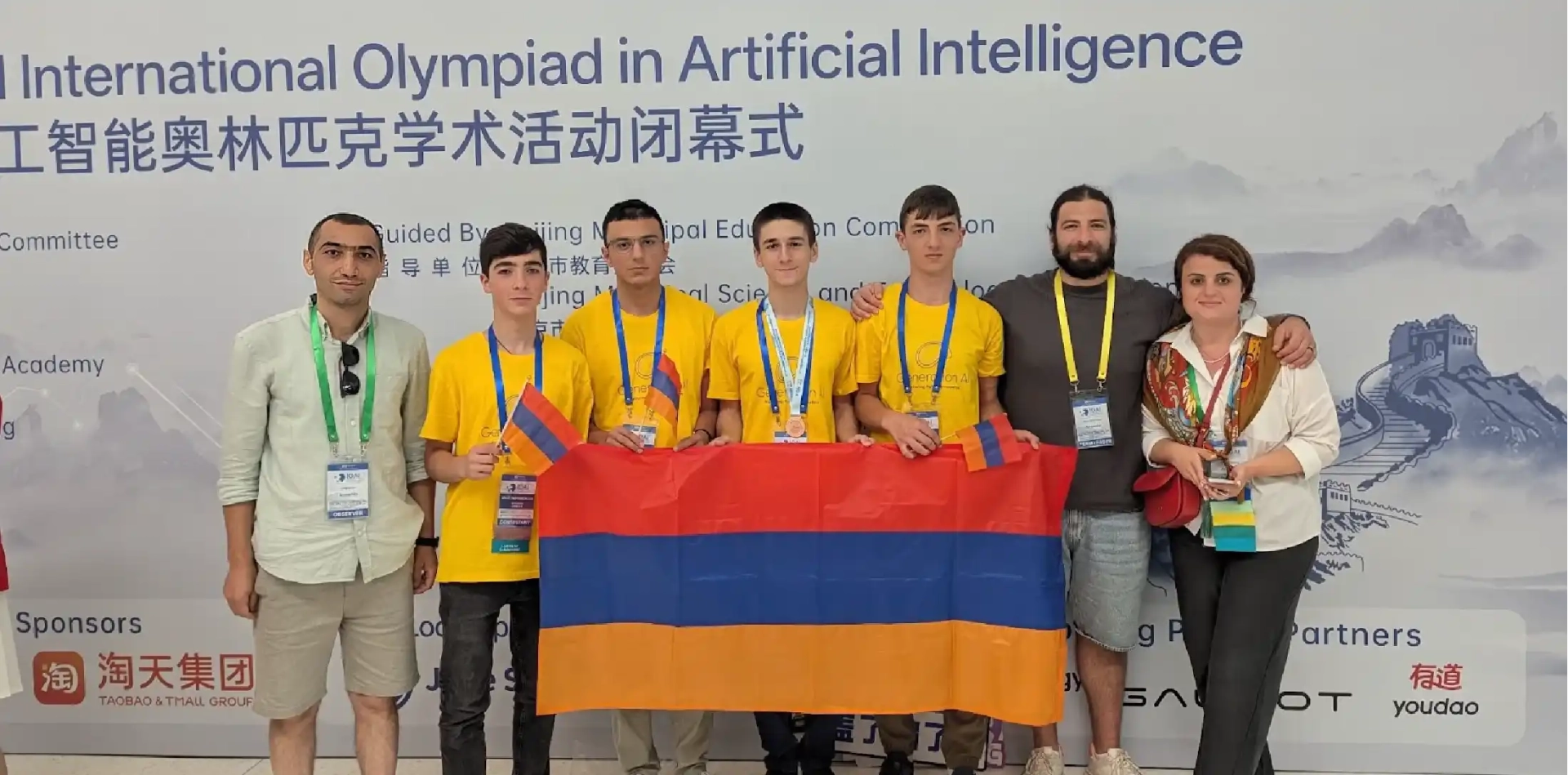
Even just the idea of participating in something like the International Olympiad in AI—which Generation AI students attended for the first time this year in China—seemed unbelievable. 

Possibilities are everywhere. You just need to take that first step.

blog widget
Team of Armenian high school students from the Generation AI program, at the International Olympiad in Artificial Intelligence (IOAI) (Photo. L to R) Avag Sayan, David Jaghatspanyan, Seryozh