Hero
Education

Why Don’t Kids Want to Go to School? U.S. vs Armenian Education, Ft. Alice Petrossian

About our Featured Expert

person
Alice Petrossian
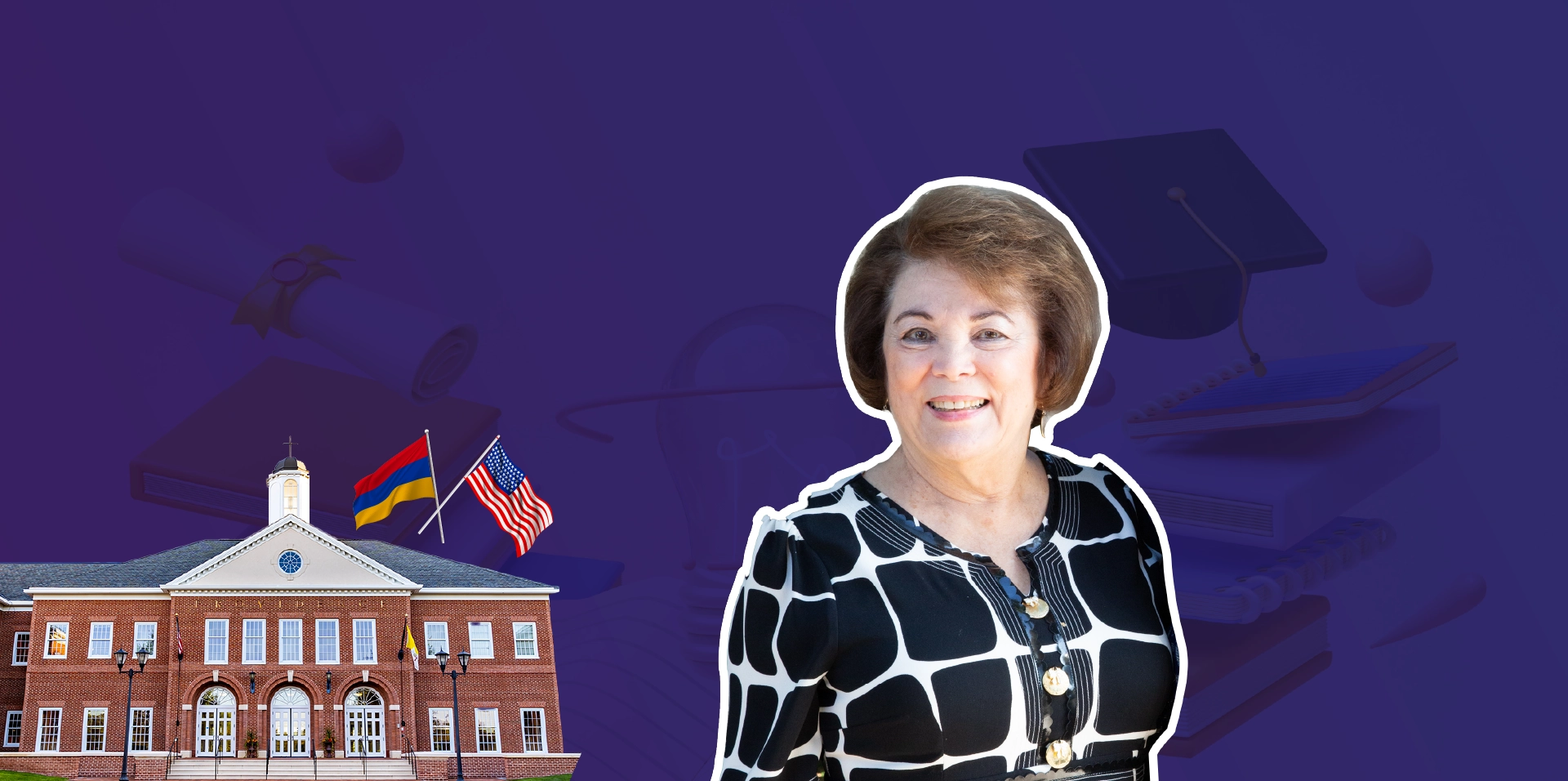
Armenian American educator Alice Petrossian is one of the Advisory Board members of FAST’s Generation AI program—a nationwide initiative that is shaping Armenia’s model for AI education. She has spent a lifetime shaping public education on both sides of the world. Leader of some of California’s most pivotal education institutions, Alice served as Assistant, Deputy, and acting Superintendent in the Pasadena and Glendale Unified School Districts. She was elected President of the 18,000-member California School Administrators Association and held appointments to numerous boards by four California governors. Yet her heart has never been far from Armenia. As an active volunteer and board member of organizations such as Teach for Armenia (TFA), UWC Dilijan, Armenian Educational Foundation (AEF) she continues to advocate for excellence and equity in Armenian education. Bridging her immense experience in both the U.S. and Armenian education systems with a forward-looking vision for reform, in this conversation she confronts the critical questions facing public school systems today and envisions how an Armenian education model can not only catch up with the world but help lead it.
blog widget
U.S. vs Armenia: How Do Educational Priorities Differ and Intersect Between Two Countries?

Different priorities, different stages of development, same challenge։ quality


No country has perfected its educational system—from pre-kindergarten through university. Every generation brings new societal needs and expectations, triggering continuous changes in educational standards and regulations. That’s true in the United States, where the system is constantly transforming.


In California, where I have spent much of my career, the population is highly diverse, with many children from immigrant families. As a result, a primary focus has been ensuring that non-English-speaking students master the language and succeed academically.


Armenia’s priorities are different, but equally urgent. The country has had to transition from a Soviet-era education system to an independent one and continues to establish foundational elements such as teacher training, curriculum development, and governance structures, while trying to define its place within the global educational landscape. The U.S., on the other hand, has had decades—even centuries—to refine its system, that is to say countries are on different stages in their journey.


Governance also is a key difference. In the U.S., each of the 50 states runs its own education system. That means there’s a lot of variation, and while that brings flexibility, it also creates inconsistency. Armenia’s education system is nationally centralized, which makes it easier to implement uniform policies, but also introduces its own set of complexities.


Despite these differences, both countries face the same core challenge: quality. In America, we say: 

‘Your zip code should not determine the quality of your education.’ 


But it often does. In Armenia, geography plays a similar role—rural students often lack the quality education they deserve. Thus, ensuring equitable access to high-quality education remains a critical challenge for both systems.

How Did Your Personal Journey from Immigrant Student to Education Leader Shape Your Vision of Education?

My mind was made at birth. 


One of my grandmothers was a physician in Soviet Armenia who fled to Iran during the war. I watched her—treating women and children, saving lives—and I was so moved by it. She would always say, “A woman needs her education and shouldn’t be dependent on men because you never know what life will offer you.” After losing her husband, she ensured my mother—who became a teacher and principal—was well educated.


And me? In kindergarten, I couldn’t wait my turn. The moment the teacher stepped out, I’d jump up and start teaching. Eventually, the principal told my mother, Would you please tell Alice she’s not the teacher… yet.”


I always had the dream of having my own classroom and that dream came true in America. I had my classroom, and for five years, I was a teacher until my principal said, “You're capable of being a principal. Go get your master’s degree in school administration.” So I did, and I never looked back.


In California, unlike Armenia, no one becomes a school principal without at least five years of classroom experience. I deeply believed in that principle. But when I started working in Armenia 30 years ago, that wasn’t the case—jobs in schools were handed out through favors and friendships. Sometimes, people even paid for these positions, which I found extremely unfair. So I began my “crazy campaign”: schools need leaders who come from teaching.


That conviction led me to serve on numerous education policy boards—and it continues to guide my work in Armenia.


Leadership matters, and I hope Armenia embraces this truth. 

blog widget
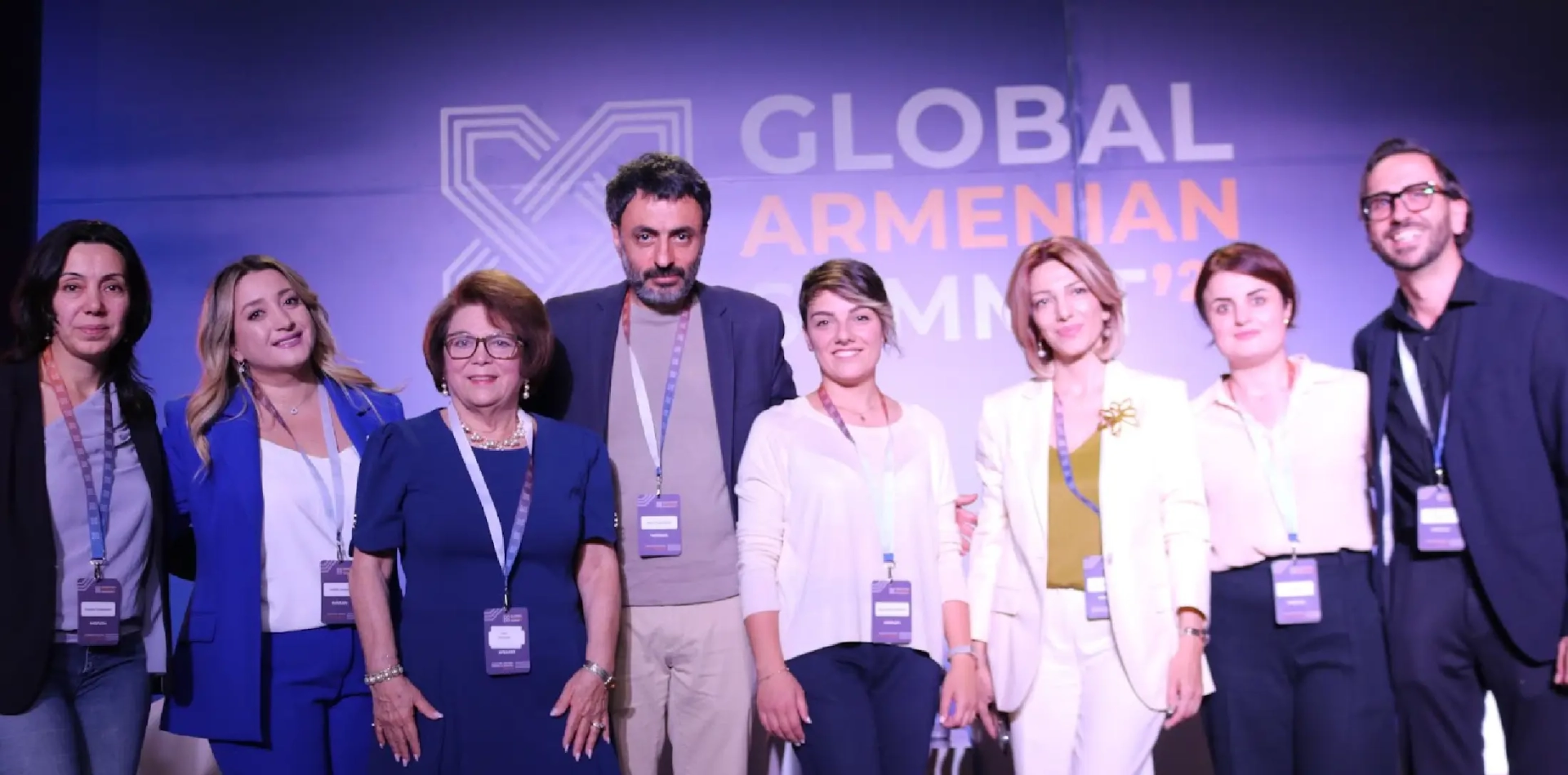
From the FAST Archives: Global Armenian Summit 2024 on advancing Armenia-Diaspora collaboration in education.
What We Have to Fight For? Comparing Public School Systems in Armenia and the U.S.

One of the most striking differences I’ve noticed between Armenia and the U.S. is the role of the principal.

Although principals in the U.S. earn slightly more than teachers—who remain among the lowest-paid professionals—their work hours are crazy. They are expected to be present at school events, fundraisers, athletic competitions, and community meetings. Their calendars are filled with board meetings, PTA sessions, and administrative obligations. It’s a demanding role that leaves little time for family or rest—one of the reasons many excellent teachers, who could become strong principals, choose not to pursue the role. 

Parents, teacher unions, school boards, and district leaders all place demands on principals. They spend much of their day walking the halls, visiting classrooms, talking to students, observing lessons and providing feedback to teachers to improve learning outcomes. I don’t see that level of involvement in Armenia. And I believe there’s something valuable in that model that Armenia could learn from.

I believe in public education and equity is what we have to fight for.

Whether in Armenia, the United States, or elsewhere, the question is the same: can we ensure that every child, no matter their circumstances, has a fair opportunity to learn? Some students may have different needs or may not engage with education in the same way—but if a child wants to learn and the system fails to provide for them, that, to me, is the greatest loss.

The U.S. system works hard to address these inequities. Think tanks and research organizations continuously study attendance patterns, learning gaps, and systemic challenges. There are even mechanisms of intervention: in some districts, if a child repeatedly misses school, local authorities may visit the home

Still, the quality of education depends not only on whether children attend school but also on what they experience inside those buildings. This, in turn, depends heavily on government policies, regulations and adequate funding.

In Armenia, after the collapse of the Soviet Union, the school infrastructure was largely left untouched. Buildings were constructed, but few were properly maintained. 


Now, there is talk of systemic reform and if Armenia is serious about building a globally competitive education system, I’m convinced the diaspora will come back because of it.

I believe we need to prioritize experimentation and replication. What is successful at Ayb? What works well at UWC? How can we replicate that success? I’m not sure we’re thinking in those terms. Instead, we keep trying to tinker.

blog widget
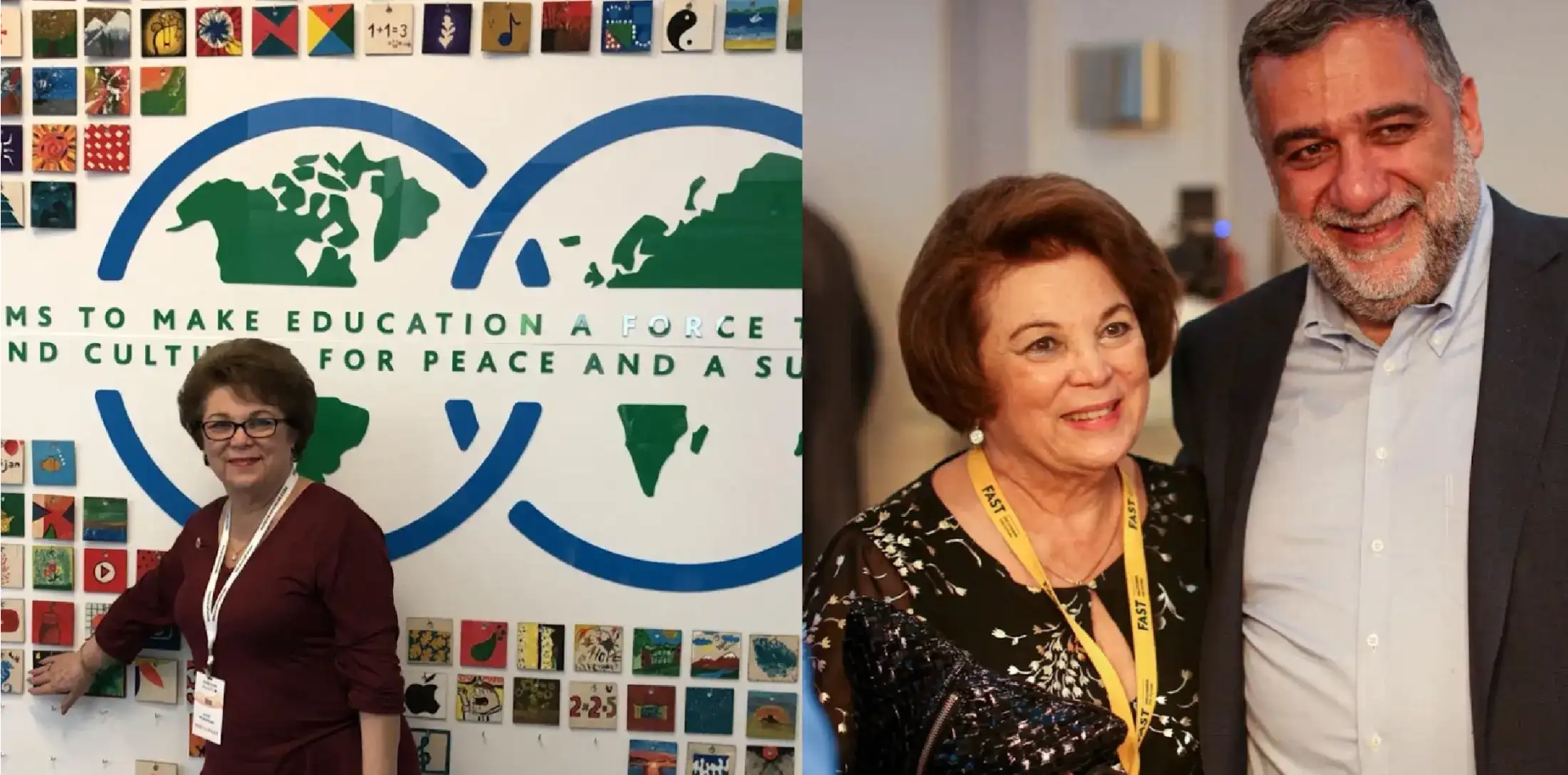
From Alice Petrossian’s archive: At UWC, united around the idea of championing global education in Armenia

You see, certain cultures—like many in Asia—are extremely successful when it comes to academic assessments. Not all cultures are built to compete that way, and that’s okay. But what we should be asking is: What do those families do differently? I’ll tell you—they make education their only priority. When the child comes home, the focus is on dialogue. It’s on reading. It’s on creating a structured environment without phones or computers taking over their time.


I think we will regret the decline in quality. In a digital world, technology often takes over, but not always for the better. Scrolling social media doesn’t improve your knowledge in science or math. 


We place so much on schools, but let’s face it—your success is also shaped by your family. They instill the belief that you can. Have you ever read The Little Engine That Could? It’s a children’s story about an old train that struggles to climb a hill. The big engines pass by, but the little one keeps trying, saying, “I think I can.” And eventually, it does. That’s the message we need to give our children—especially our boys.


We cannot have a culture of highly educated girls and only fewer boys or men. This will kill our nation. We must be dedicated to providing the highest level of education for boys, ensuring they don't drop out after joining the military.


We need to give them a vision—whether through the military, families, or our education system—that they are capable and bright

Why Don’t Children Want to Go to School?

The number of unhappy children in schools across Armenia is overwhelming to me. Of course, there are always some children who don’t want to go to school, so we need to provide alternatives. In many countries, some children choose homeschooling because their parents recognize they have unique ways of learning, and that’s what they need.

What worries me is that schools don't provide what technology offers them. What we are teaching in our schools is not exciting.

I’m not saying this is unique to Armenia—globally teaching has shifted from being something caring and wonderful to something rule-focused, where students aren't really learning. Ask your parents or grandparents what school meant to them in Armenia. They weren’t skipping school. 


If there’s no mandate to attend, and no one in the building makes the experience meaningful or makes the student feel valued—why would they go?


  • The value of presence: I’ll give you an example: Teach For Armenia teachers. I’ve watched them teach, and I was moved because their methods win the hearts of students. When I hear a child say, “I come to school because this TFA teacher loves me—they want me to succeed,” that means a world to me. We have the model—let's do it for the whole nation. 

When the teaching is good, students want to be there. The value of what goes on in that room and the person caring for you makes you want to go to school, and that's what we need to drive forward.

  • What careers are made of: What’s even more alarming is what’s happening at the university level. Professors and students simply are not showing up. How can you do that? These young people are now paying for their education, and their future depends on the consistency and quality of what they receive. That’s what we’ve lost. Families must get back to what they once stressed: education, education, education. This is what careers are made of. 


We need serious reform. I feel sorry for those in educational governance right now—everyone is offering new ideas. But we need to pause and assess: What’s working? What’s worth keeping? What truly needs to change? Until we clearly decide what to retain and what to reinvent—and actually act on it—we won’t move forward.


  • Parents' role: Education needs balance. It depends on three essential partners: parents, teachers, and students. For too long, parents were not allowed a voice except to complain. That has to change.


We need structures where parents are kept informed in real time. My son and his wife get a text the minute their child is absent: “Your son was not in class today.” Now it’s their responsibility to make sure their child is where they should be.

That’s the kind of partnership we need. And we don’t have it here—yet.

We also need stronger systems of accountability for attendance, grades, and behavior. If a student misbehaves, I believe they should write the note themselves. I prefer this over the adult writing the note: “I am in trouble because I did....” Let the child reflect, take ownership, and communicate.

And when they go home, I hope they’re not punished—but encouraged to do better. These are meaningful steps we need to work on in Armenia, too.

blog widget
Why is AI Education Important? And How Can Generation AI Reshape Education in Armenia?
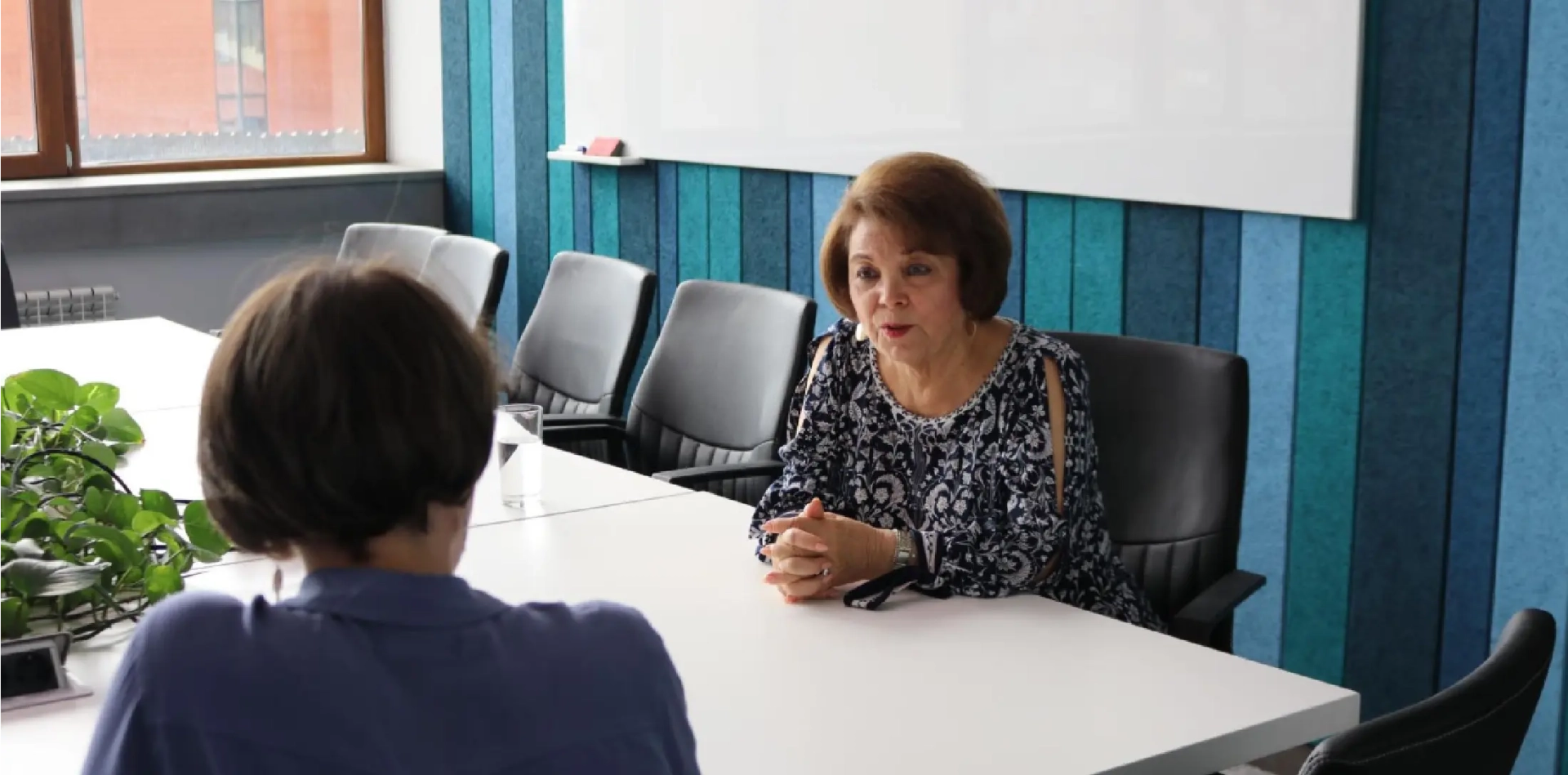
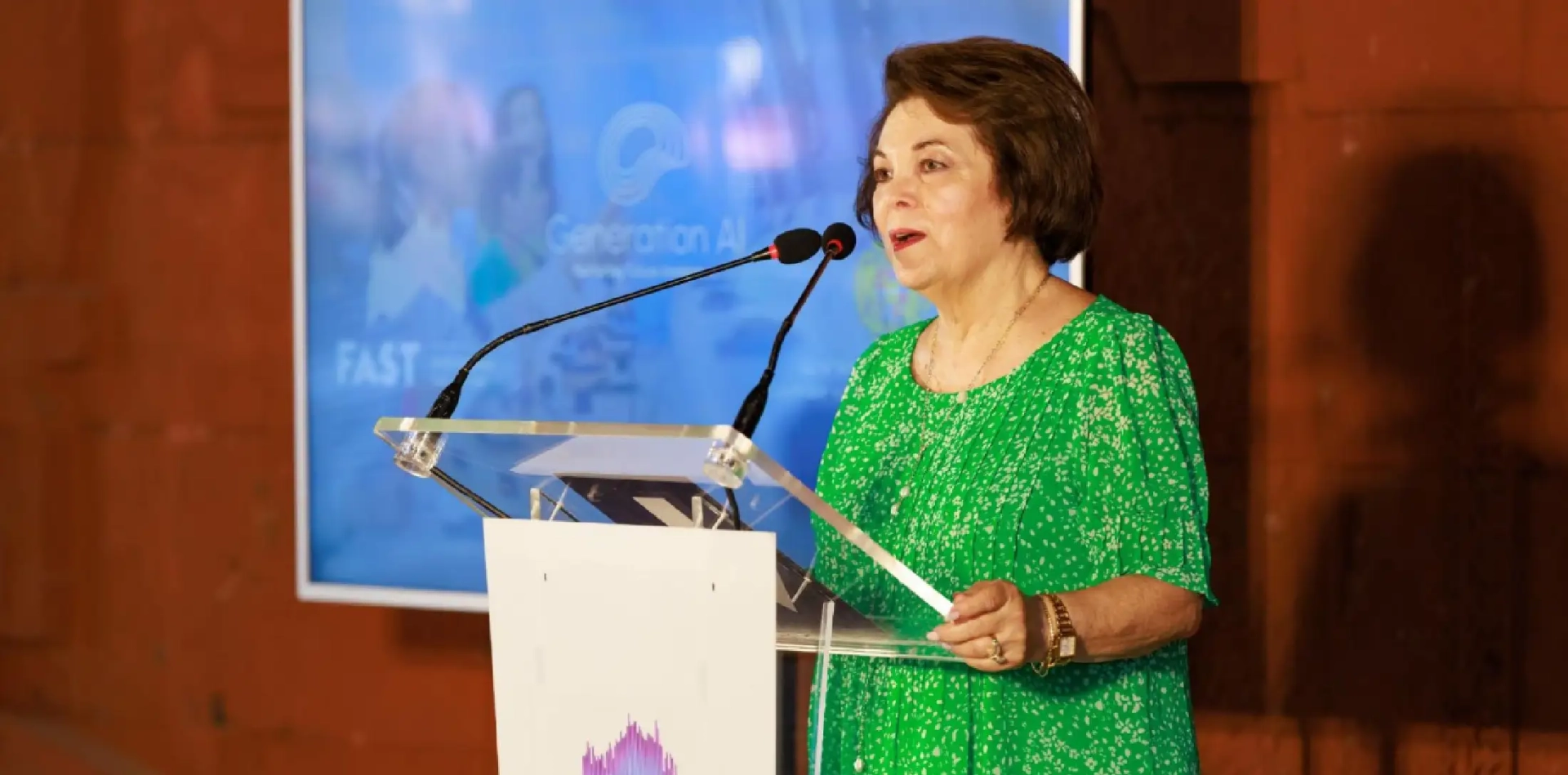
I’m incredibly proud of what FAST is doing with the Generation AI High School Project. We're ahead globally, which is nice to say because, as an advisor, I looked into what's happening in California regarding teaching AI, and they're still debating whether it is good or bad. Meanwhile, in Armenia, we have over 400 kids already diving deep into math and technology.


 I truly believe AI is the future. 


Sure, there’s fear around it. But that's exactly why education matters. What we’re doing at FAST is helping to create a society that understands AI, contributes to it, and profits from it. 


Armenia can be that model.


I’m extremely proud that Generation AI was featured at the UNESCO Conference, where we found out that our work in curriculum development and teacher training is far better than in most countries globally. 


blog widget
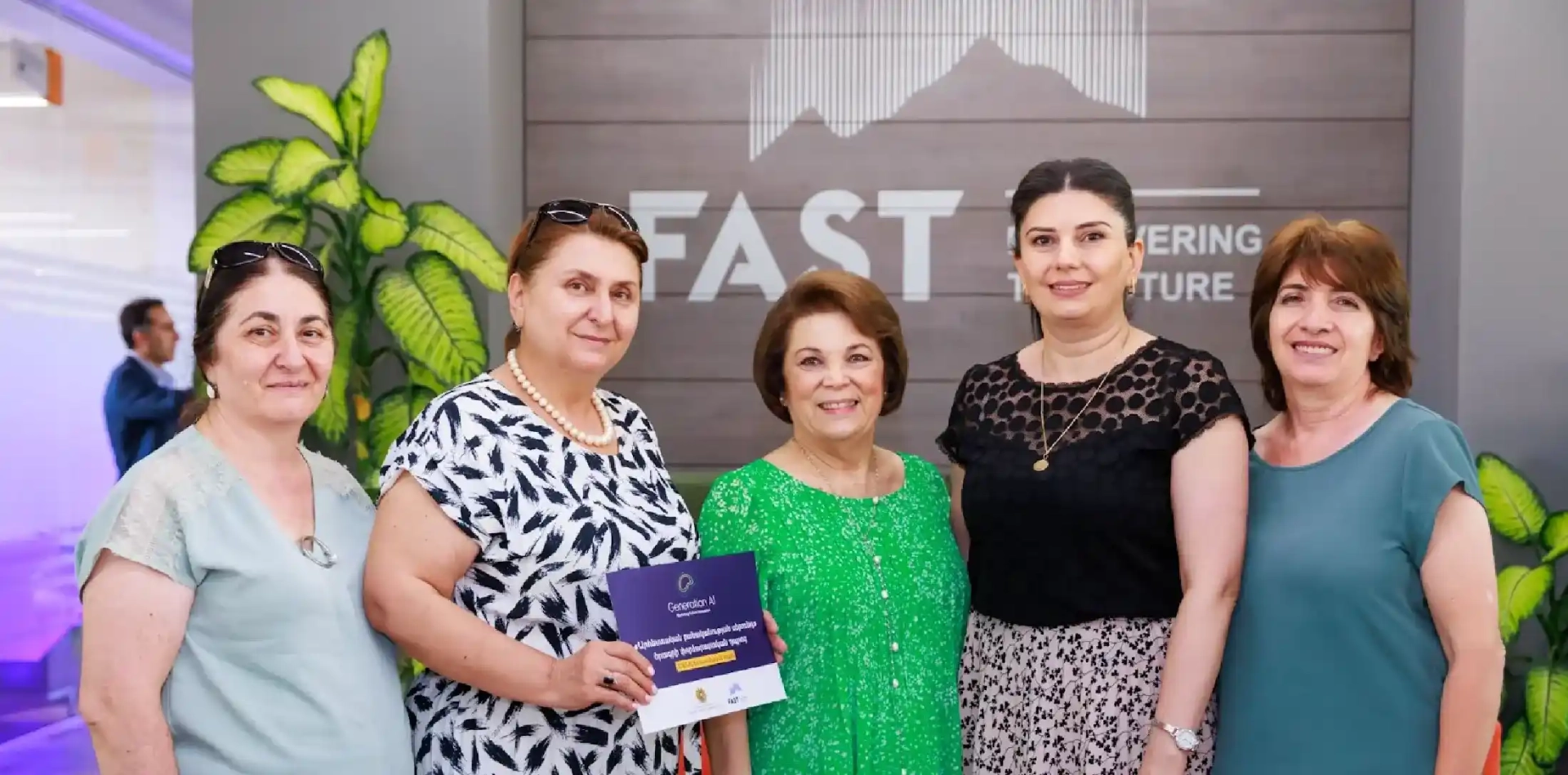
From the FAST Archive: Alice Petrossian with Generation AI Program teachers

Do I want every school in Armenia to have this program? Absolutely. Every year we delay, we lose another generation to the knowledge we’re building.


Of course, there will always be negative uses for every invention in this world. But our job is to show what’s possible with the positive. And I believe FAST is helping Armenia do just that.

My dream is for Armenia to take the good and share it globally, and I hope FAST will be the next one to do so.