Hero
Research

Dairy as a Source of Energy? Armenian Scientists Say Yes

Have you ever thought about what happens to all that leftover liquid after cheese is made?

Scientists of FAST’s ADVANCE Research Grants program's Biotechnology research project, Anna Poladyan, Karen Trchounian, Ani Paloyan, Ela Minasyan, Sargis Aghayan, and Garabed Antranikian, have published promising findings in the high-ranking Q1 journal Applied Microbiology and Biotechnology


Their work showcases exciting results from research conducted in Armenia, opening new doors for efficient whey treatment and positioning it as an economically viable resource for biomass and biocatalyst production.

From Waste to Use, Whey Opens New Ways

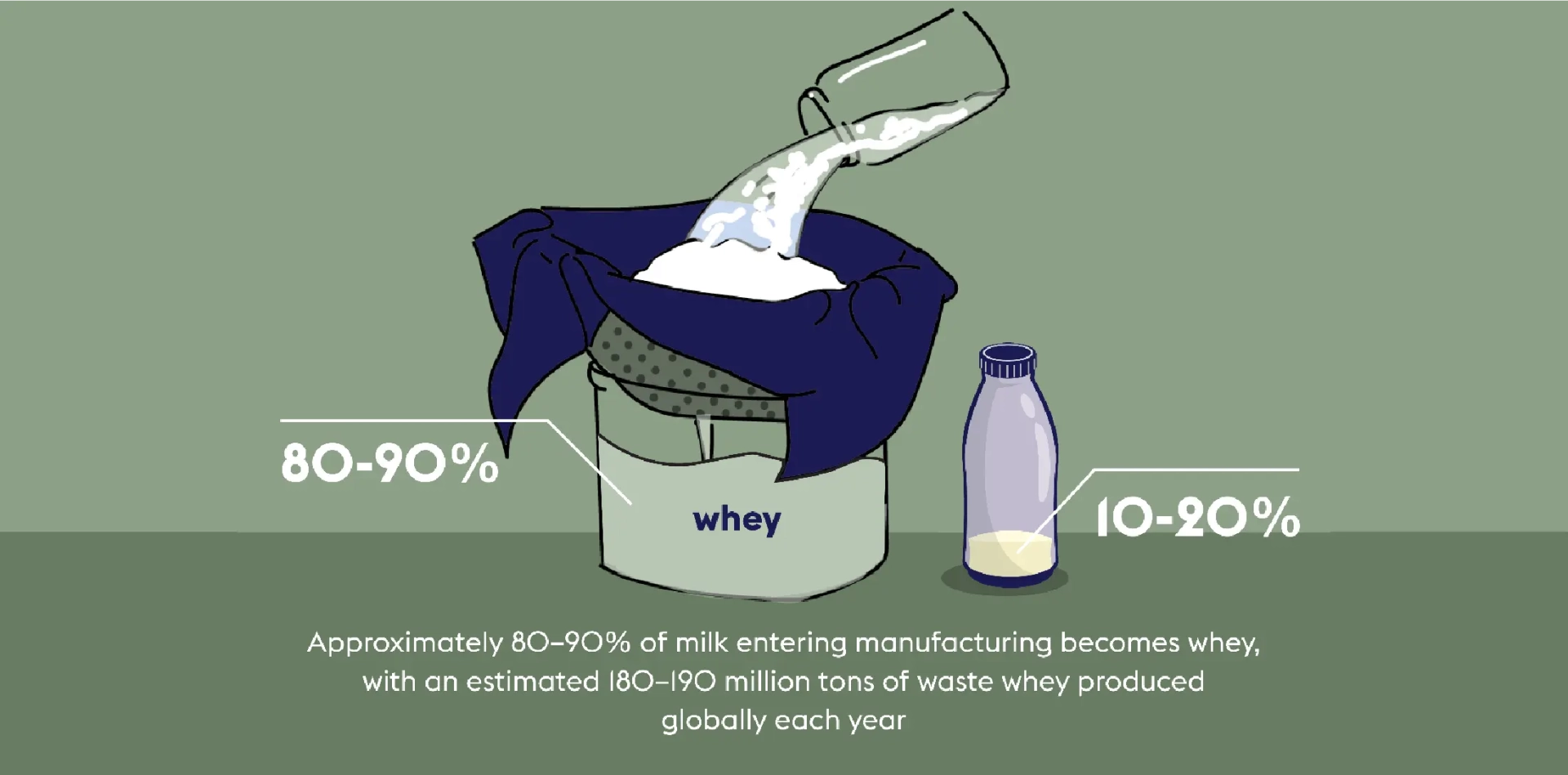
Whey, a significant byproduct of dairy production, constitutes 80-90% of the total volume of milk entering the process and contains about 50% of the nutrients, including lactose, proteins, minerals, and vitamins. You may have heard that whey is as a popular source of extracted protein for supplements, but it is also a suitable nutrient source for cultivating microorganisms, enzymes, and high-value chemical compounds. 


A staggering 180-190 million tons of whey is generated annually worldwide; however, it also poses a challenge as a massive waste product.


The industry's current struggle lies in finding sustainable ways to repurpose billions of liters of acid and sweet whey (a by-product of curd and cheese production) effectively.

blog widget

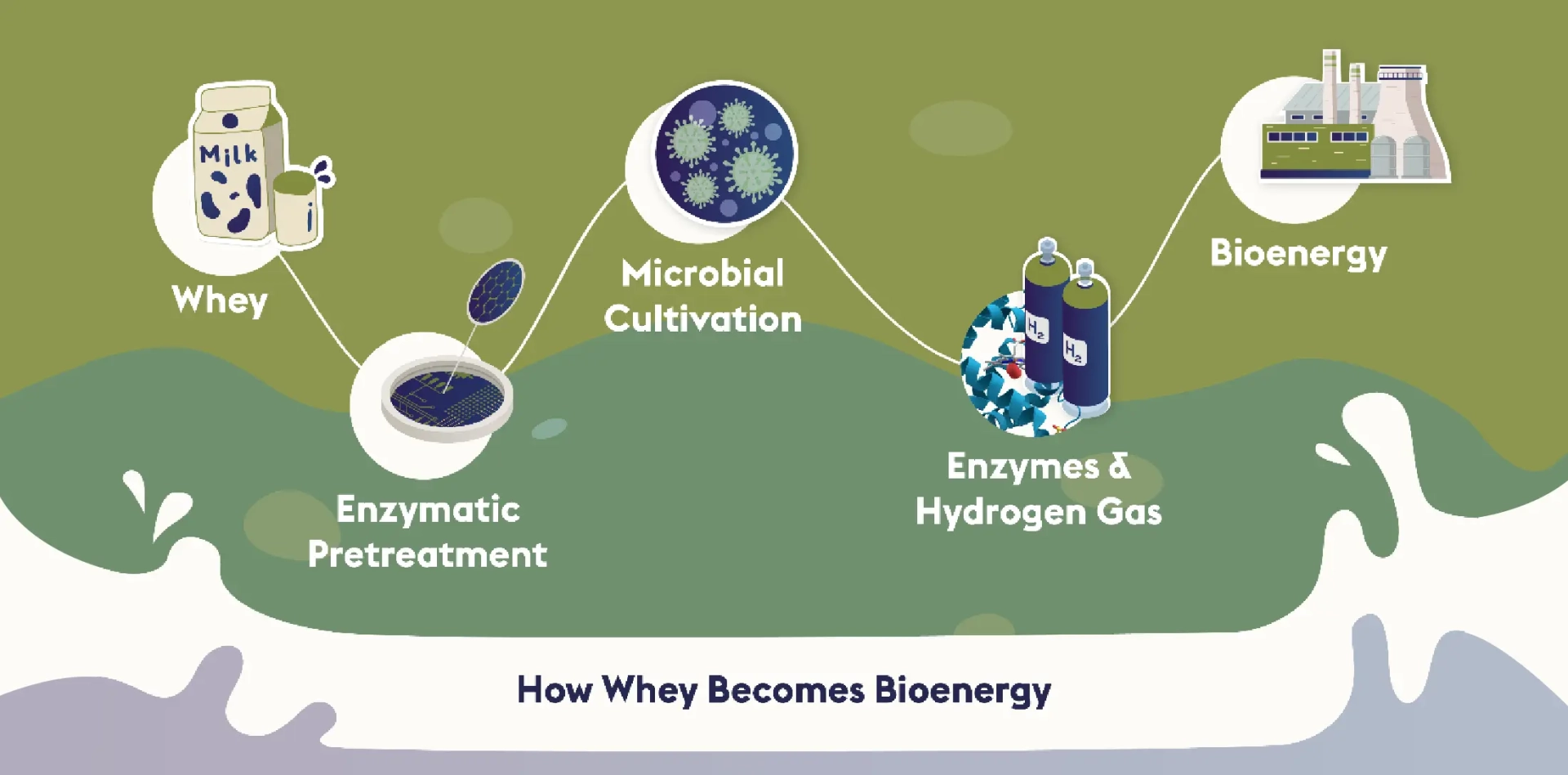
For this research, the team collected whey samples from a local dairy factory in Armenia and found that, with a little enzymatic help, it can boost the growth of different types of microbes, leading to increased production of hydrogen gas and enzymes, which can then be used in energy applications. These findings are set to contribute to the development of economically feasible and more sustainable biotechnological processes.

The Science Behind It

Hydrogen gas (H2) is a promising zero-carbon, high-energy carrier and can serve as a substrate for electricity generation in fuel cells, which combine H2 and O2 to produce electricity, heat, and water. However, fuel cell operation is still costly for large-scale applications, and the metals (catalysts) used are of low abundance on Earth and are non-biodegradable. This is where Microbial hydrogenase (Hyd) enzymes, which can generate and oxidize H2, come in.


These enzymes can be applied as anodic catalysts in fuel cells, and Ralstonia eutropha and Escherichia coli are of particular interest as having O2-tolerant Hyds allows their implementation inH2-based biotechnological processes to produce valuable compounds. Nevertheless, the feasibility and economics of scale-up of Hyd preparations have yet to be established if they are to be used in commercial devices. Finding the optimal conditions for large-scale fermentations with media derived from economically viable nutrient sources such as the dairy industry side-stream is of great benefit.


In this study, researchers used both untreated and enzymatically pre-treated whey using a thermostable β-glucosidase to generate biomass of the two model organisms, E. coli and R. eutropha H16. Using the modified medium resulted in enhanced hydrogenase and H2 production, identifying whey as an excellent nutritional source to drive bioprocesses for their prolonged and enhanced production.


The results obtained from the current study will serve as a basis for future technologies toward using whey for the economical production of both R. eutropha and E. coli biomass, Hyds, and H2 production.
The Takeaways
blog widget
  • Dairy Industry whey‐based side streams can serve as a medium for microbial cultivation.


  • Microbes can produce valuable products like enzymes and hydrogen gas from whey.


  • The Pivotal Revelation found from this research is that pretreating whey with enzymes such as thermophilic ß-glucosidase can improve microbial growth and product yield and become a base for bioenergy production.


Using whey as a raw material for biotechnological processes primarily has two advantages:


  • It's cost-effective: Whey is readily available and much cheaper than other sources of nutrients used in biotechnology.


  • It's sustainable: Using whey reduces waste and helps the dairy industry become more environmentally friendly.


Above is an incomplete summary. The full paper by our scientists, titled “Valorization of whey‐based side streams for microbial biomass, molecular hydrogen, and hydrogenase production” can be accessed on the Springer website.


The Biotechnology project, led by Principal Investigator Dr. Garabed Antranikian of the Hamburg University of Technology, seeks to develop innovative technologies to secure the efficient utilization of organic waste streams from various industries in Armenia. The project is co-funded and co-implemented with Yerevan State University and is scheduled to run until autumn 2024.