Hero
Research
Voice of the community

Innovation Begins with Wonder: A Birthday Tribute to Viktor Hambartsumyan

Exclusive Interview with
person
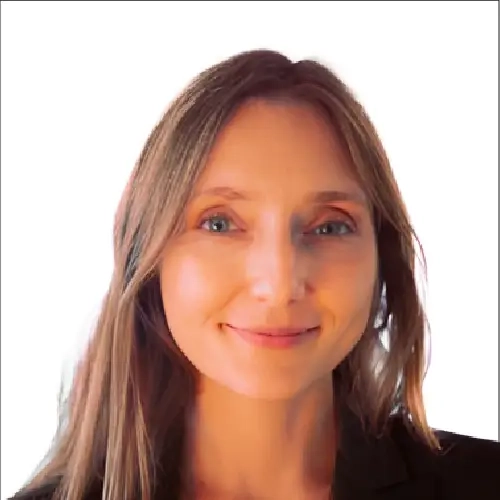
Dr. Tatiana (Kazakova) Tarnowski
Dr. Tatiana (Kazakova) Tarnowski, the great-niece of Victor Hambartsumyan, ia s chief strategy officer and co-founder at Leaders on Purpose. She shapes strategic coalitions such as Space4Girls, Africa on Purpose and Capital on Purpose, carrying forward what she calls a family’s “equation of thinking” for systems change.

On September 18, 2025, Viktor Hambartsumyan— one of the founders of theoretical astrophysics and the visionary behind the Byurakan Observatory — would have turned 117. A founding member and the longest-serving president of the Armenian Academy of Sciences, he placed Armenia on the astronomical map, drawing international recognition at the height of the 20th century’s space revolution.


This is the Hambartsumyan Armenians remember. But to his family, he was also the curious boy who couldn’t resist climbing the roof of his childhood home, just to stare at the stars.

Innovation Begins with Wonder

“My favorite story is that when he was three or four years old, he would run up to the roof just to look at the night sky,” said Tatiana Tarnowski, Hambartsumyan’s great-niece. 

“He’d go back down to play, then rush up again to gaze at the stars, so that finally his parents gave him a telescope. That persistence, that awe, was there from the very beginning — and it was nurtured by his family. That, to me, is the essence of his greatness.” 


Hambartsumyan was an innovator in a time when it wasn’t a buzzword. Today, innovation appears in every speech, every strategy, every business plan, until it risks becoming cliché, leaving us to ask:

What does innovation really mean?

Tatiana’s story offers a way of answering. As Hambartsumyan’s great-niece, her life, shaped by both the wonder and the weight of a scientific family lineage, offers a perspective that carries not only the impact of a single life on a field or a nation, but also the choices it opens for those who follow: 

blog widget
What Happens When Science and Innovation are the Family Language?

For Tarnowski, Hambartsumyan’s influence was both cultural and deeply personal. 


She grew up between St. Petersburg, Armenia, and later Germany, in a family where science was as natural as conversation. Her mother, Naira Petrosyan, is a mathematician. Her uncle, Levon Petrosyan — Hambartsumyan’s nephew — is a renowned game theorist at St. Petersburg State University.


“Visiting Armenia, learning about my family, and the observatory in Byurakan where even Prince Philip once visited — it gave me a sense that science in our family went way, way back,” Tarnowski said. 


Science, for her, was the atmosphere she breathed. “At one point I thought I’d become an astronaut, then I thought I’d change the world. But what I inherited from that environment is the energy and soul of limitlessness,” she said.  

“What really inspired me as a child was this idea that there is nothing you cannot achieve if you refuse to limit your boundaries— that’s what Viktor gave us.”

But being part of a scientific family was not without pressure. 

“I was in a scientific bubble. It was so normal to me. But in the end, you had to do it yourself. You had to find your own way.”
What Happens When a Girl Chooses Math?

When she was six, her family moved to Germany. “My mom told me I was completely silent for three weeks, and then suddenly I spoke fluent German,” Tarnowski recalled. “I think it was stubbornness, but also confidence. That ability to adapt became part of my character.”


The bigger challenge came later. “When I studied mathematics at university, I found myself among the 1% of women in the program,” she said. 

“In Russia and Armenia, it was much more common for women to study STEM, but in Germany at that time it wasn’t the case.”

Being one of the few women in the field, made her feel a sense of alienation. Yet that period became a turning point.


“It pushed me to reclaim my confidence, trust my own path and embrace the fact that I didn’t need to fit the stereotype of a math student to belong,” she said. “That realization shaped my resilience and my perspective on what true inclusion means.”


Mathematics became a way of thinking that shaped everything that followed. 


“For the first three weeks, you see numbers. Then for three months, you’re in a three-dimensional space. Then four and a half years, you’re in infinite dimensions. And then suddenly you see how our economy has been modeled or how a company is being valued,” Tarnowski said.  “That’s how mathematics still plays a big role in my career.”

What Do We Build When the Past is No Longer an Option?

“From early on I was fascinated by systems — social systems, economic systems — and how our reality actually functions,” Tarnowski said.


As Chief Strategy Officer at Leaders on Purpose, she now works with coalitions of multinationals, governments, and organizations to push for what she calls a “purpose-first economy.” 


The group came to prominence during the pandemic, publishing a letter in the Financial Times urging leaders not to simply “build back” after COVID-19, but to “build better.” 


“We realized something in the system was poised for transition,” Tarnowski said. “We can’t just recreate what existed before. We need to move into the future. And so, we launched this global letter with all our CEOs."


Since then, the coalitions have expanded into Africa on Purpose, Cities on Purpose, Capital on Purpose, and — perhaps most unexpectedly — Space on Purpose.

"The space economy is coming, and it will define our lives for generations.”

“The question is: can we build it better than past industries? Can it be environmentally sustainable, inclusive, and designed with smarter incentives?”

For her, the answer lies in thinking not in terms of minimum viable products but in “minimum viable ecosystems.” 

“You have to ask: what is the unique system value that you can provide? And how do you elevate an entire ecosystem?”
blog widget
What Is Innovation Beyond the Buzzword?

Once forbidden, once feared, it carried no connotation of the future — its Latin root innovo meant a return to the original. Over time, especially after the French Revolution, it was reborn as a promise of progress, and has transformed into a cliché, and now into a cornerstone of modern economic discourse. But beneath the overuse, what does it truly mean? 


“Innovation is part of a process,” Tarnowski said. “It’s about taking ideas, imagining their application, and turning them into markets that actually serve people,”  

“You have to come from the future, literally, and ask: What are the markets that will serve our people, our country, our world?”

“In Germany, some call this hyper-innovation — letting go of the present, even when it still produces profit,” she said.  


“You let it conceptually die. And based on the values, the resources, the strength of your country or of your organization, you transport yourself into this new playing field from a sustainable future backward.”

“Real innovation must be environmentally responsible, locally rooted and globally relevant.”

That’s the foundation. And education is key. 


“What do you teach right now? There is a duality,” she said. “On the one hand, young people need to understand the current system. But they also need to learn what’s coming — so they can become the first generation of social entrepreneurs and business builders who feel empowered to create in this new way.”


She pointed to China’s 100-year strategy and Switzerland’s bottom-up development as examples of long-term planning. 


“Both shows how nations can shape their own sustainable futures,” she said. “Armenia, too, can play a significant role. The country is just around the corner, yet it is positioned to connect East and West and build industries that are multilayered, sustainable and globally relevant.”


If Not Our Generation, Then Who? Where New Value and New Industries Take Shape.
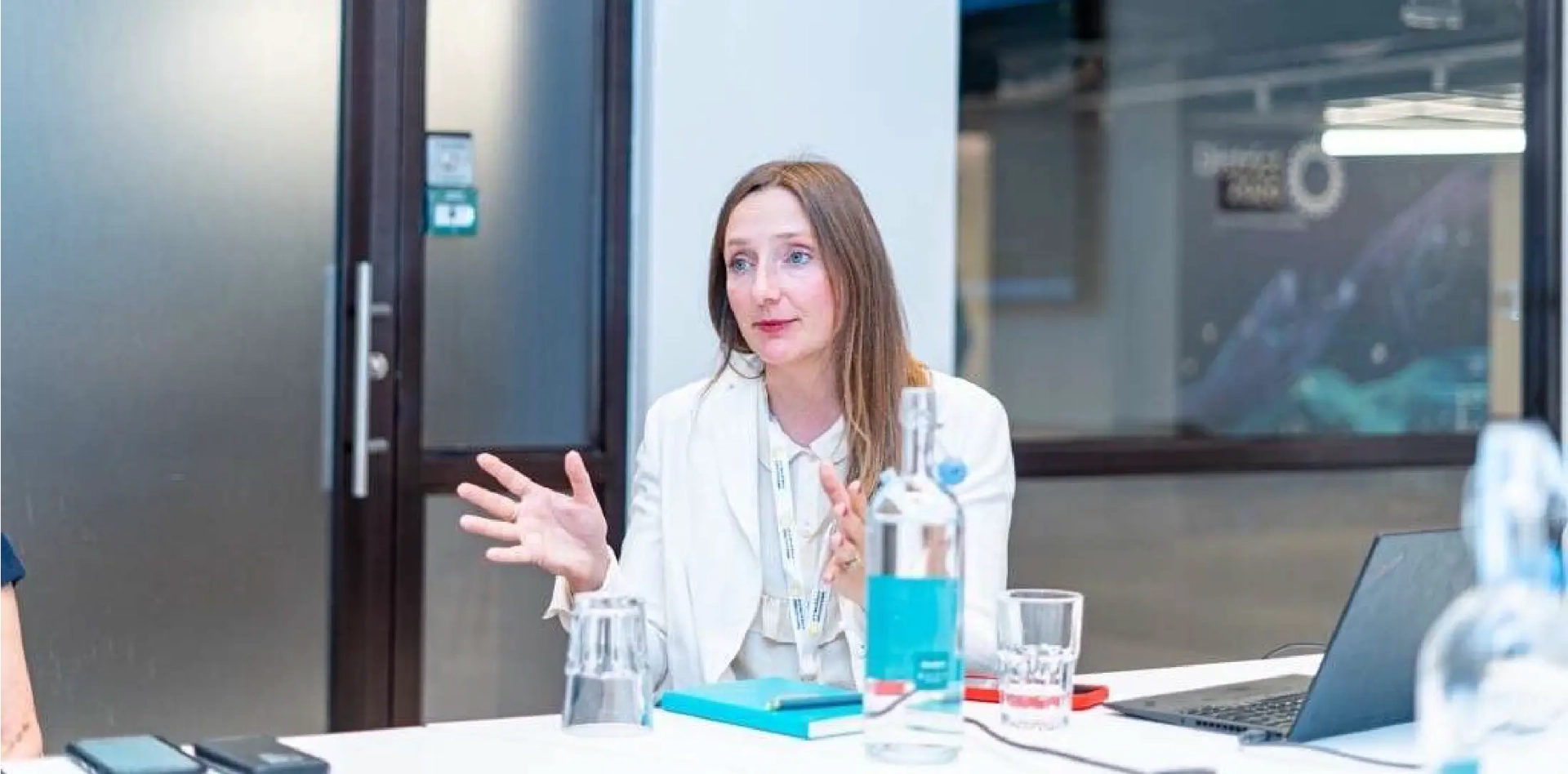
For Tarnowski, the economy is no longer about isolated profits. 

“The evolution of our economy dictates that you have to serve the system’s purpose and value,” she said.

“Today, through technology, we can finally think that way — elevating an entire ecosystem, recognizing that nature has a role to play, and seeing business as part of that broader system.”

That perspective makes her optimistic. “The good news is, there are so many positive projects happening in the world,” she said. “With little presence in the media, the power of community enables us to connect, exchange knowledge and empower one another.”


One of those projects, she sees, is Armenia itself. “Look, for instance, at FAST,” she said. “The foundation was created to help transform Armenia into a different state. That is already a very good trajectory.” 


“It takes a bit of time, and it takes process. But more than anything, it takes collaboration — cross-cultural collaboration, the willingness to invite others in. That is absolutely essential. And then it can be showcased on a bigger scale to the world, making it even more investable.”


For her, the responsibility is generational. “This is the time where it’s really our generation that has to lead,” she said. 

“Because no one else will do it for us. The countries that are rewriting what is of value are the ones creating the industries of the future.”